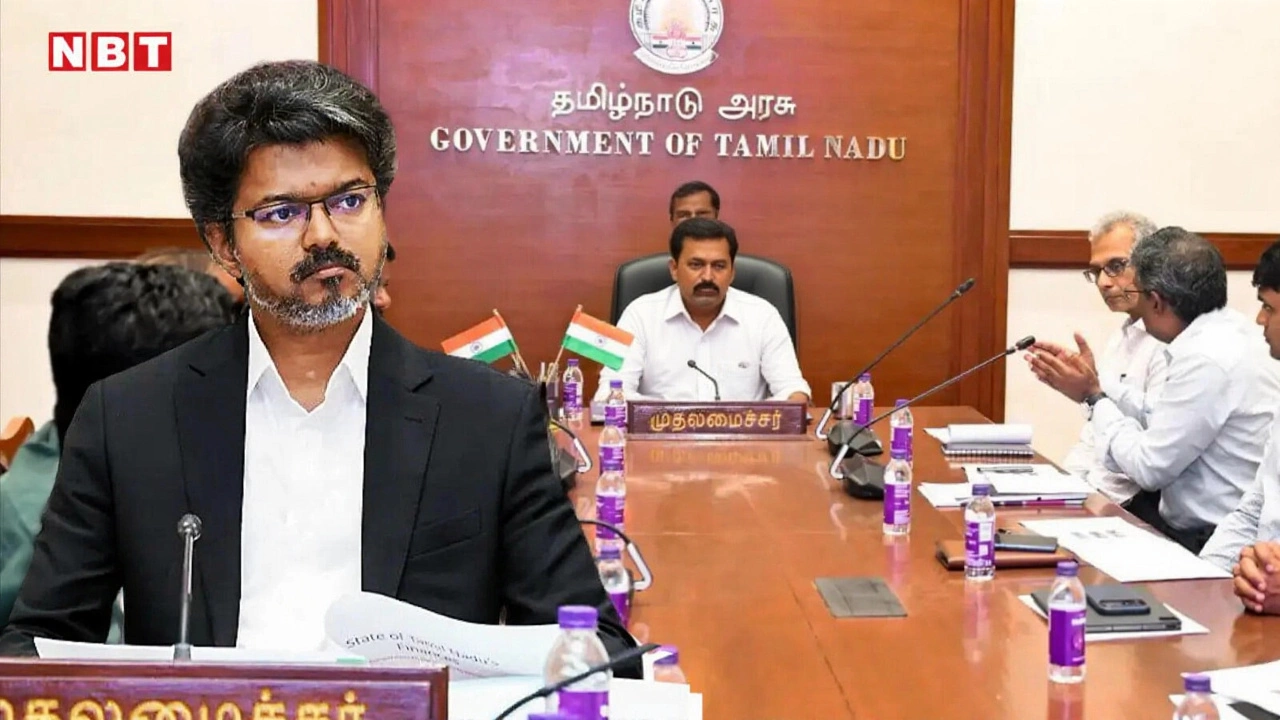
When Joseph Vijay, Chief Minister of Tamil Nadu, stepped into the role of real power, he didn’t just take office—he started playing politics. The shift from silver screen star to state leader has been swift, and his early moves suggest a strategy deeply rooted in Tamil identity. Analysts warn that invoking symbols like “Litte” could be risky, but for Vijay, it seems essential to cementing his image as the true voice of Tamils.
The twist is that this isn’t just about governance—it’s about narrative. In Chennai, the capital where political winds change fast, Vijay’s party, Tamizhaga Vetri Kazhagam (TVK), won 108 seats in the recent assembly elections, making it the single largest party. But here’s the catch: no majority on its own. So how did an actor become Chief Minister? Enter M.K. Stalin, Leader of the Dravida Munnetra Kazhagam (DMK).
A Coalition Born Out of Strategy
Stalin, known for his sharp political instincts, backed Vijay with support from allied parties—including five Congress MLAs—to help him cross the magic number needed to form government. It was a calculated move. Some say Stalin prefers seeing Vijay struggle; others believe it’s a way to keep regional rivals at bay while maintaining influence behind the scenes.
This coalition setup means Vijay’s administration rests on fragile ground. Unlike traditional one-party governments, his relies heavily on external support. Every decision now carries weight—not just policy-wise, but politically. One wrong step, and the alliance could crack under pressure.
Building a New Political Identity
Vijay’s approach blends two worlds: administrative principles inspired by the Dravidian movement and electoral appeal centered around Tamil pride. He named his party Tamizhaga Vetri Kazhagam—not Dravida, not All India, but specifically *Tamil*. That choice wasn’t accidental. It signals a break from broader ideological labels and focuses squarely on cultural resonance.
By emphasizing language, heritage, and community pride, Vijay aims to connect emotionally with voters who feel overlooked by larger national narratives. This dual strategy lets him govern using established frameworks while campaigning on fresh, localized themes.
The Symbolism of 'Litte'
In a controversial yet telling gesture, reports indicate Vijay may invoke memories of “Litte”—a reference likely tied to historical or cultural symbolism within Tamil society. While some see this as empowering, critics argue it risks alienating certain groups or stirring old tensions. Whether intentional or not, such gestures carry symbolic weight—and potential backlash.
Education Under Fire: The NEET Controversy
One issue already testing Vijay’s leadership is the cancellation of the National Eligibility cum Entrance Test (NEET) paper. When the incident occurred, Vijay reacted strongly, demanding accountability from the central government. His response highlighted both his assertiveness and willingness to challenge federal authority when necessary.
For many students and parents across Tamil Nadu, NEET represents more than just an exam—it's a gateway to medical careers. By taking a firm stance, Vijay positioned himself as someone willing to fight for local interests against perceived injustices from New Delhi.
What Lies Ahead?
Looking ahead, Vijay faces several challenges. Balancing coalition partners will require constant negotiation. Delivering tangible results quickly will be crucial to proving legitimacy beyond celebrity status. And navigating complex center-state relations—especially on issues like education—will test his diplomatic skills.
Meanwhile, opponents are watching closely. Traditional parties like DMK and AIADMK remain influential despite their reduced presence. If they coordinate effectively, they could pose serious threats in future polls.
Frequently Asked Questions
How did Joseph Vijay become Chief Minister of Tamil Nadu?
Vijay became CM after his party, TVK, emerged as the single largest party with 108 seats. With backing from M.K. Stalin’s DMK allies and five Congress MLAs, he secured enough support to form a minority government.
Why is invoking 'Litte' considered controversial?
Invoking 'Litte' taps into deep-rooted cultural memory, which can unite supporters but also provoke opposition if interpreted as divisive or exclusionary toward non-Tamil communities.
What role does M.K. Stalin play in Vijay’s rise?
Stalin strategically supported Vijay through allied parties, possibly aiming to maintain influence without directly ruling. Some analysts suggest he might prefer Vijay failing so DMK regains dominance later.
How strong is Vijay’s current government?
His government depends entirely on external support, including five Congress MLAs. Any withdrawal of trust could destabilize his administration, making stability uncertain.
What impact will Vijay’s policies have on Tamil Nadu?
If successful, Vijay’s focus on Tamil identity could reshape regional politics. However, balancing ideology with practical governance remains a major challenge.