When Arvind Chatterjee, a senior energy analyst in New Delhi, broke down the latest government data last week, he didn't just see savings—he saw a shifting landscape. The central government’s push to make electricity bills "zero" for millions of Indian households is hitting a wall of new regulations. While the promise of free power sounds like a dream, the reality involves complex subsidies, looming tariff changes, and a urgent need for battery storage.
The core of this movement is the Ministry of New and Renewable Energy (MNRE)’s aggressive rollout of the PM Surya Ghar: Muft Bijli YojanaIndia. Launched with fanfare, the scheme aims to install one million rooftop solar systems annually. For homeowners in states like Uttar Pradesh and Maharashtra, this isn't just about green energy—it's about survival amidst rising utility costs.
The Subsidy Structure That Changes Everything
Here’s the thing that most people miss: the subsidy isn’t a flat rate. It’s tiered based on system capacity. Under the current guidelines, homeowners installing a system up to 3 kilowatts (kW) receive a subsidy covering 40% of the benchmark cost. For systems between 3 kW and 7 kW, the subsidy drops to 20% of the additional cost beyond 3 kW. However, there’s a hard cap: the maximum central subsidy anyone can claim is ₹78,000.
This means if you’re a typical urban family consuming 300–500 units monthly, a 3 kW system might cover your needs almost entirely during daylight hours. But wait—the math gets tricky. A 3 kW system requires roughly 30 square meters of roof space. If your home doesn’t have that unshaded area, you’re stuck with a smaller system that won’t eliminate your bill completely.
Let’s look at the numbers. A standard 3 kW on-grid system costs approximately ₹1.8 lakh to ₹2.2 lakh before subsidies. After the ₹78,000 central grant, your out-of-pocket expense drops to around ₹1.0 lakh to ₹1.4 lakh. Many state governments add their own layer of support, but these vary wildly. In Uttar Pradesh, local Block Development Officers are actively promoting the scheme, yet many citizens remain confused about the application process.
The Net Metering Trap: Why Zero Bills Aren’t Guaranteed
Turns out, the "zero bill" promise relies heavily on net metering. This mechanism allows you to send excess solar power back to the grid during the day and draw from it at night. If your solar panels produce more than you consume, the distribution company (DISCOM) credits your account. Ideally, these credits offset your nighttime usage, resulting in a near-zero bill.
But here’s the twist. Experts warn that this model is fragile. A recent report by *Patraika* highlighted that while net metering works well now, proposed regulatory changes could dismantle it. The issue? DISCOMs are losing money. They buy cheap solar power from rooftops during the day but sell expensive grid power at night. To balance their books, they want to change the rules.
In Maharashtra, draft orders suggest capping the feed-in tariff—the rate at which DISCOMs buy your excess solar—at just ₹2.82 per unit. Meanwhile, the peak evening tariff when you’d need to buy power back could jump to ₹9–₹10 per unit under the new Time-of-Day (TOD) pricing structure. This disparity makes "zero billing" mathematically impossible for on-grid systems without batteries.
The Rise of Hybrid Systems and Battery Storage
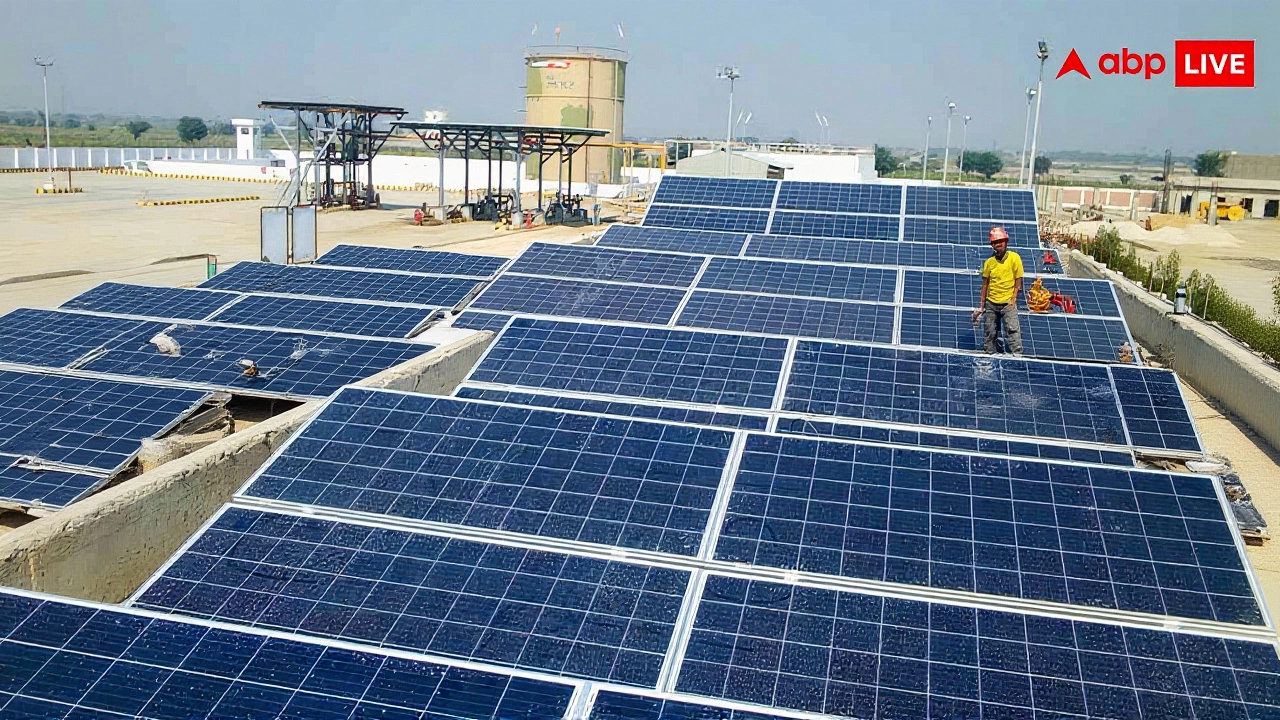
If the old model is breaking, what’s the alternative? Industry insiders are pointing toward hybrid solar systems with lithium-ion battery storage. Unlike on-grid systems, hybrids store excess energy locally. You don’t rely on the grid’s fluctuating rates; you use your own stored power during peak evening hours.
A premium 3 kW hybrid system, including a lithium battery, currently costs between ₹3.5 lakh and ₹4.5 lakh. That’s significantly higher than an on-grid setup. However, proponents argue it’s an insurance policy against future tariff hikes. As one installer in Lucknow noted, "The government may cut subsidies or raise tariffs tomorrow. But your battery keeps working."
The challenge is financing. While the central subsidy of ₹78,000 applies to hybrid systems too, the upfront cost remains high. Some banks offer zero-interest EMIs, but eligibility criteria are strict. For many middle-class families, the gap between the subsidized price and the total cost is still too wide to bridge without significant personal savings.
What’s Next for Solar Homeowners?
The details are still unclear regarding the final implementation of TOD tariffs nationwide. Public consultations are ongoing, and stakeholders—including consumer groups and solar manufacturers—are lobbying hard. One thing is certain: the window for easy, low-cost on-grid installations is narrowing.
Homeowners interested in the scheme should act quickly. Apply through the official PM Surya Ghar portal, verify your roof’s structural integrity, and consult independent engineers—not just sales agents. Remember, the goal isn’t just to get a subsidy; it’s to secure long-term energy independence. As regulations evolve, those who invest in smart, hybrid solutions today will likely regret waiting until tomorrow.
Frequently Asked Questions
How much subsidy do I get for a 3 kW solar system?
Under the PM Surya Ghar Yojana, a 3 kW system qualifies for the maximum central subsidy of ₹78,000. This covers approximately 40% of the benchmark cost. Additional state-level subsidies may apply depending on your location, potentially reducing the net cost further.
Will my electricity bill really be zero?
Not necessarily. While net metering can reduce bills significantly, upcoming Time-of-Day tariffs may lower the credit rate for excess power sold to the grid. Without battery storage, nighttime consumption could still incur charges, especially if peak tariffs rise above ₹9 per unit.
What is the difference between on-grid and hybrid systems?
On-grid systems connect directly to the utility grid and have no battery storage. Excess power is sent to the grid for credits. Hybrid systems include batteries, allowing you to store excess energy for use during the night or power outages, making them more resilient to tariff changes.
How much roof space do I need for a 3 kW system?
You need approximately 30 square meters of unshaded roof space for a 3 kW solar installation. Ensure the area is free from shadows cast by trees or adjacent buildings to maximize efficiency and qualify for full subsidy benefits.
Is the subsidy available for all income groups?
Yes, the central subsidy of up to ₹78,000 is available to all residential consumers regardless of income. However, some state-specific additional incentives may have income caps or priority lists, so check with your local electricity department for regional variations.